Altenstadt, Gisingen, Levis, Nofels, Tisis, Tosters and the town centre
Feldkirch is a great whole of village history, unmistakable characters, special features and living tradition.
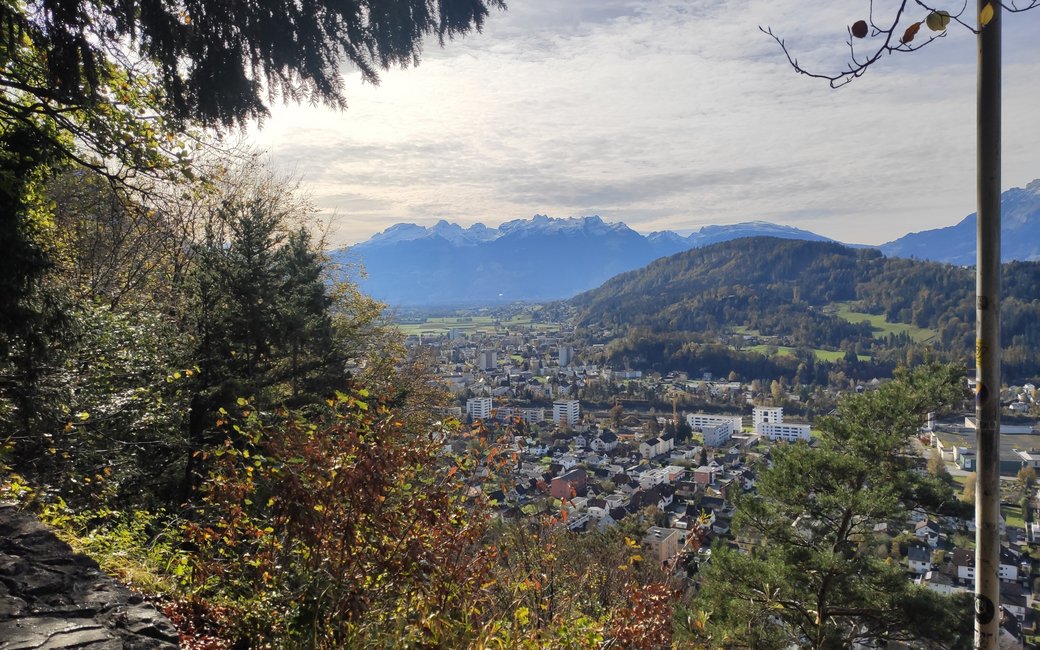
Feldkirch is a great whole of village history, unmistakable characters, special features and living tradition.

With its listed old town, Feldkirch's city centre is one of Vorarlberg's very special gems. the town was first mentioned in a document in 1218 and has thus already experienced 800 years of eventful history. Feldkirch has been a diocesan town and episcopal seat since 1968 and a university town since 2007 with the founding of the University College of Teacher Education. Feldkirch is a creative laboratory and musical centre.

Feldkirch also offers a wide range of opportunities for families, children, singles and young people. Numerous clubs offer attractive leisure activities in a wide variety of sporting areas. Feldkirch has well-equipped schools and childcare centres as well as state-of-the-art healthcare facilities. The social network in Feldkirch is characterised by a particularly high standard of quality, especially in terms of care for older citizens.

In times of globalisation, it is often less important where you live than how you live. Everyone contributes to this "how". Individuality is very important in Levis. But there is also a tradition of clubs and neighbourhood support.
Levis is one of the seven districts of Feldkirch and is nestled between the Ardetzenberg in the west and the Amberghang in the east. The neighbourhood stretches from Feldegggasse in the south to Raiffeisenstrasse in the north. Around 2,300 residents live here.

This district is home to a Catholic and a Protestant church, important infrastructure facilities such as a kindergarten, primary and secondary school, post office, finance and labour office, various bus stops and the train station, many shops and businesses, several inns, restaurants and a hotel as well as tax consultants, lawyers and doctors' surgeries.
There are children's playgrounds, a football pitch and a tennis court, a wildlife park and a number of hiking and cycling trails for the whole family to enjoy. The various historical buildings such as St Magdalena's Church, the Siechenhaus, the Levner Bädle, the Elend-Bild Chapel and Amberg Castle are also well worth a visit.

"Altenstadt is older than Rome." This assertion - as presumptuous and exaggerated as it may sound - comes from a knowledgeable and authoritative source. It is based on the fact that a Late Bronze Age cult site was excavated in the 1950s on the Grütze field in Altenstadt. This means that the first known traces of human culture in the village are almost 3000 years old. The reason for the emergence of a settlement lies in its favourable location at the entrance to the valley between Ardetzenberg and Tillis. This fact has had a significant influence on the history of the Altenstadt district in later eras.

Opportunities to get to know people are offered in particular by the many local clubs, which are happy to welcome new people into their ranks. The businesses in Altenstadt also offer a wide range of products and services. The range of services offered by the business people extends far beyond everyday necessities. But it is not only the hustle and bustle that is important, there are also plenty of opportunities for recreation in and around Altenstadt.

Gisingen has no proud history and is not the home of famous artists. Rather, Gisingen is a small village that emerged from farmers, servants and serfs. Due to stubborn and consistent work in the past, it achieved ecclesiastical independence and, thanks to its favourable location between the Ill and Ardetzenberg rivers, the size that made it the most populous district of Feldkirch.
The development of Gisingen must be seen in the context of the colonisation of the Rhine and Ill valleys. The land was distributed to clans, which is where the name Gisingen comes from. The places with the suffix -ingen are regarded as centres of Alemannic settlement and indicate descent from a particular head of the family.

What is certain is that Gisingen may have been a very impressive farming village for centuries and already had 100 houses in 1811. in 1885 there were already 185 houses with 830 inhabitants and around 1890 Gisingen began to grow rapidly due to the construction of the Hämmerle textile factory. As this factory not only brought work and income, but also foreign people to the town, a lot of building work had to be done. The Hämmerle housing estate still bears witness to this today.

Nofels has been one of the seven districts of the town of Feldkirch since 1925. In terms of area, Nofels is the largest district of Feldkirch. Nofels, situated at the foot of the Schellenberg, includes the hamlets of Fresch, Bangs and Matschels, the latter two of which are now home to the Bangs-Matschels Natura 2000 nature reserve.

Nofels, a former farming village, is now a modern and constantly growing town without high-rise buildings or industry. Since 1990 there has been a lively partnership between Nofels and Ingerkingen, a village in the municipality of Schemmerhofen in Baden-Württemberg, Germany. All information about village life and the many local clubs can be found in the Nofels local and club newspaper OV-Aktiv.

Tisis is a district of the town of Feldkirch and lies on the border with the Principality of Liechtenstein. The village developed from a farming settlement at the beginning of the 13th century. The old church of St Michael in Tisn is one of the oldest religious buildings in the region and originally also served as a parish church for neighbouring communities.
In the first half of the 20th century, the Catholic teachers' seminary - which later became the Pedagogical Academy - played an important role in the development of the village, as did the Feldkirch Regional Hospital in the second half of the 20th century.

Tosters is framed by the Blasenberg to the east and the Schellenberg to the west and opens up towards Liechtenstein in a southerly direction.
From the village fountain, you can reach the two landmarks of the district via the "auf der Platte" parcel of land: Tosters Castle and the old parish church of St Corneli. There is a yew tree so huge that it is estimated to be over a thousand years old. If you keep walking, you will eventually reach the Schellenberg, from where you can enjoy views of the village, the Rhine Valley and, on certain days, even as far as Lake Constance. Or you can walk through the forest and reach the Hub parcel. Via the Tostner Ried, a popular local recreation area, you return to the village centre.


